NVIDIA signals silicon photonics shift at GTC

Jensen Huang’s GTC keynote highlights co-packaged optics as central to future AI infrastructure, with industry experts calling it a turning point for silicon photonics.
At its GTC keynote this week, NVIDIA CEO Jensen Huang underscored the growing importance of silicon photonics in scaling next-generation AI infrastructure, marking what many see as a pivotal shift away from traditional copper interconnects.
The company’s latest updates to its Spectrum-X platform, including the introduction of co-packaged optics (CPO), signal a deeper integration of photonics and electronics to address mounting bandwidth, power and latency challenges in large-scale AI systems.
According to Graham Reed, Director of CORNERSTONE and a leading figure in silicon photonics, the announcement represents a significant milestone for the industry.
“NVIDIA’s update on the Spectrum-X switch with co-packaged optics is an important moment, confirming that silicon photonics is central to next-generation AI infrastructure,” he said.
Reed highlighted that while the advantages of photonics for scale-out architectures are well established, NVIDIA’s commitment to the COUPE process technology, developed in collaboration with TSMC, is particularly notable.
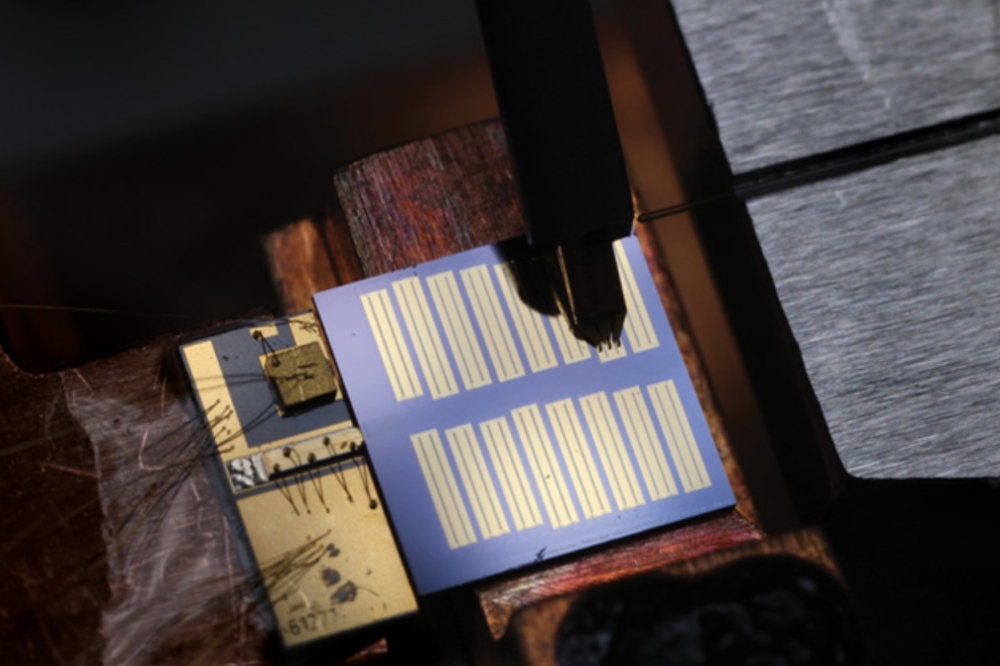
The approach integrates photonic and electronic components directly on-chip, helping to overcome the physical limitations of conventional interconnect technologies.
He also pointed to a broader strategic shift within NVIDIA. Despite a long-standing reliance on copper-based interconnects for scale-up systems, the company is now placing photonics at the core of its future platforms, including Vera Rubin Ultra.
This transition is expected to support increasingly complex configurations, such as NVL576 and future architectures like Kyber NVL1152.
The move reflects a growing consensus across the industry that copper interconnects alone are no longer sufficient to meet the performance and efficiency demands of advanced AI workloads.
Beyond its technical implications, the announcement also carries strategic significance for regional ecosystems. Reed noted that the rapid pace of development in photonics technologies underscores the need for countries such as the UK to act quickly to maintain competitiveness.
“The UK must act immediately to leverage its world-leading expertise and secure a role in this emerging photonics ecosystem,” he said.
As hyperscale AI infrastructure continues to evolve, NVIDIA’s endorsement of silicon photonics is likely to accelerate adoption across the sector, reinforcing its role as a foundational technology for future high-performance computing systems.