SOH PICs edge toward volume production

NLM Photonics’ latest 1.6T and 3.2T devices, fabricated on GlobalFoundries’ AMF HP process, highlight growing momentum for silicon-organic hybrid technology in high-speed AI and datacom applications.
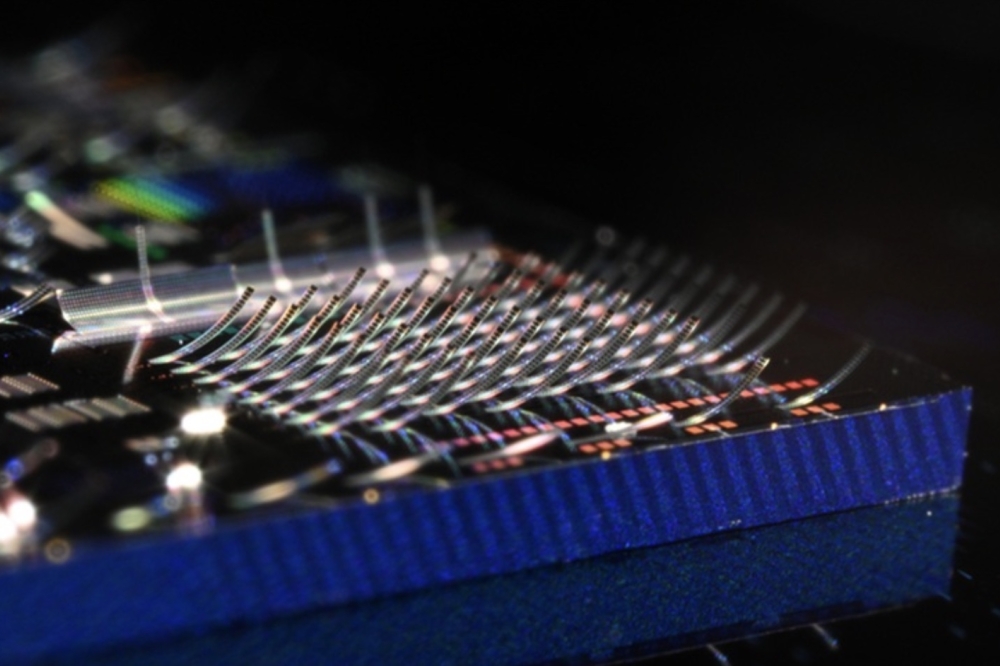
Silicon-organic hybrid (SOH) photonic integrated circuits are taking a step closer to commercial reality, as NLM Photonics begins sampling its latest generation of high-speed devices fabricated on an advanced silicon photonics platform.
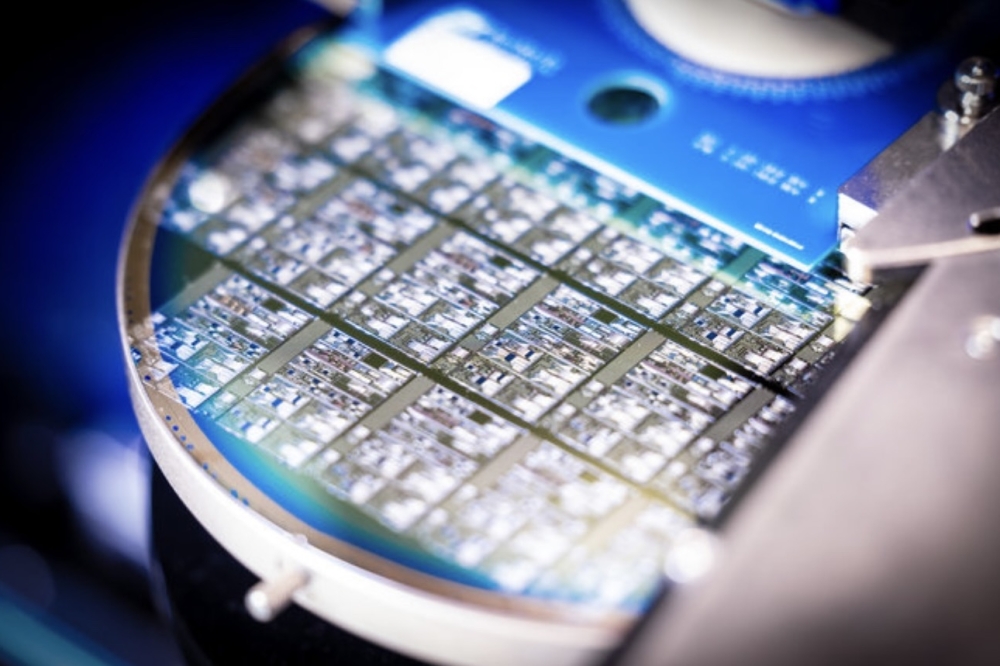
The company has announced the availability of 1.6T and 3.2T PICs manufactured using the AMF HP process from GlobalFoundries, marking a significant milestone in transitioning SOH technology from research to scalable production.
Developed in collaboration with Epiphany Design, the second-generation devices have been taped out using an advanced process node, with a dedicated process design kit currently in development.
The announcement reflects a broader push within the photonics industry to overcome the performance limitations of conventional silicon photonics, particularly as demand accelerates for higher bandwidth and energy-efficient interconnects in AI and data centre environments.
While silicon photonics remains the dominant platform for optical transceivers, scaling to higher data rates is becoming increasingly challenging due to bandwidth and power constraints.
SOH technology addresses these challenges by combining the manufacturability of silicon with high-performance organic electro-optic materials.
NLM Photonics’ approach leverages its proprietary material platform to deliver significantly higher bandwidth, supporting 200 Gb/s and 400 Gb/s per-lane data rates, alongside reduced power consumption and a smaller device footprint compared to conventional designs.
Fabrication on a production-ready silicon photonics platform is a key development. By utilising GlobalFoundries’ AMF HP process, the devices demonstrate compatibility with existing semiconductor manufacturing infrastructure, an important factor in enabling industry adoption at scale.
The collaboration with Epiphany Design further underscores the role of specialised design expertise in integrating emerging materials into established foundry ecosystems.
The move towards higher-capacity PICs aligns with growing demand from AI and high-performance computing applications, where data throughput requirements continue to increase rapidly.
Devices operating at 1.6T and 3.2T are expected to play a central role in next-generation optical interconnects, particularly as hyperscale data centres look to balance performance, power efficiency and cost.
NLM Photonics is showcasing the new devices at OFC 2026, where it is engaging with industry partners on sampling and potential deployment pathways.
The demonstration signals increasing confidence that SOH PICs can move beyond laboratory validation towards real-world implementation.
As the industry seeks viable routes to scale optical performance, the integration of new materials within established silicon photonics processes may prove critical.
The latest development suggests that SOH technology is emerging as a credible candidate to extend the roadmap for high-speed photonic integration in AI-driven infrastructure.