A new class of photonic chip for human-safe pathogen control
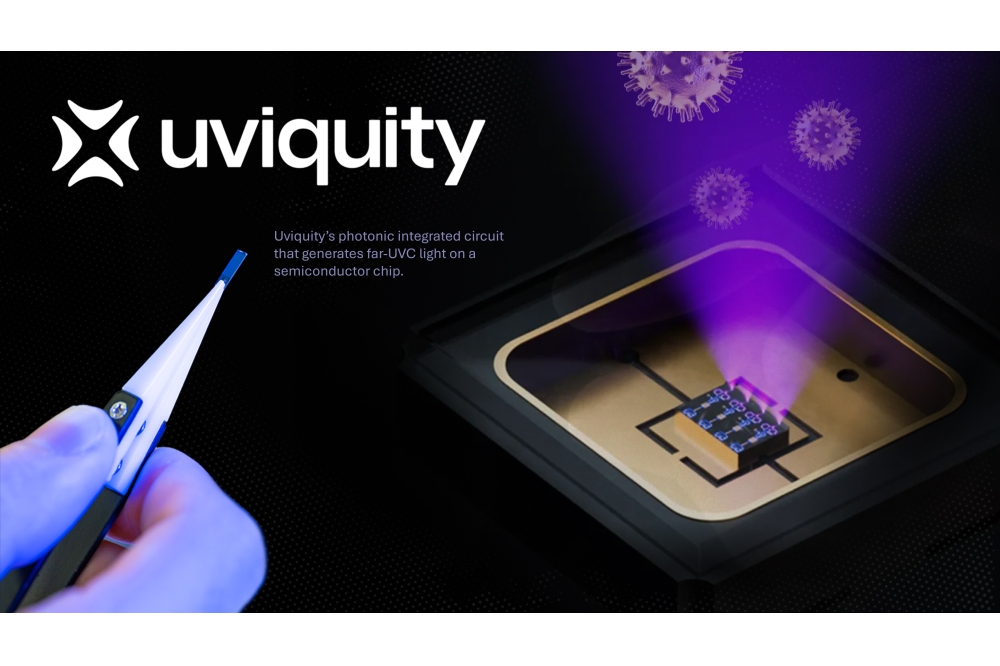
The world’s first solid-state photonic chip that delivers human-safe, pathogen-lethal far-UVC light to rapidly eliminate viruses, bacteria, fungi and mold spores in air, surface, and water
BY SCOTT BURROUGHS, CEO, UVIQUITY
ULTRAVIOLET light has long been recognised for its germicidal properties, yet its use has historically been constrained by safety, scalability, and system-level complexity. In recent years, far-UVC light, typically defined as wavelengths between 200 and 230 nm, has emerged as a promising solution for continuous pathogen inactivation in occupied environments. Experimental and clinical studies have shown that far-UVC can inactivate a broad spectrum of viruses, bacteria, fungi, and spores while remaining safe for human exposure within established regulatory limits.
Despite this demonstrated potential, far-UVC adoption remains limited. The challenge has not been efficacy, but rather the lack of a scalable, efficient, and manufacturable light source. Today’s far-UVC systems rely almost exclusively on excimer lamps, which impose fundamental constraints on cost, lifetime, form factor, and system integration.
Uviquity is addressing these challenges by developing the first solid-state far-UVC photonic integrated circuit (PIC), delivering chip-scale generation of spectrally pure far-UVC light using established semiconductor manufacturing processes. The company’s approach supports compact, efficient, and scalable light engines that can be deployed wherever pathogens exist in air, on surfaces, and in water without the operational constraints of legacy ultraviolet systems.
The germicidal power of light
Ultraviolet (UV) light spans wavelengths from approximately 100 nm to 400 nm and has been used for disinfection for more than a century. Within this range, UVC light (200–280 nm) is particularly effective because it is strongly absorbed by nucleic acids and proteins, damaging the DNA, RNA, and structural components of microorganisms and rendering them nonviable.
 Electromagnetic spectrum showing the wavelength ranges of visible, ultraviolet, and far-UVC light.
Traditional germicidal UVC systems typically operate near 254 nm and rely on mercury vapor lamps or, more recently, UVC LEDs. While effective against pathogens, radiation at these wavelengths penetrates living tissue, requiring strict controls to prevent eye and skin injury. As a result, conventional UVC systems must be shielded, interlocked, or used only in unoccupied spaces, limiting their utility for continuous disinfection.
Far-UVC light, generally defined as wavelengths between 200 nm and 230 nm, behaves differently. At these shorter wavelengths, photons are strongly absorbed by the outermost layers of human skin and the superficial corneal epithelium of the eye, limiting penetration into deeper, living tissue. Microorganisms, which lack these protective barriers, remain highly susceptible. This unique interaction enables far-UVC light to inactivate pathogens in occupied environments when delivered within established exposure guidelines.
Proven safety and efficacy—with a scaling challenge
Over the past decade, a growing body of peer-reviewed research has demonstrated both the germicidal efficacy and the safety profile of far-UVC light. These efforts accelerated during the COVID-19 pandemic, as researchers and standards bodies worked to evaluate far-UVC for real-time air and surface disinfection. Early commercial deployments of far-UVC have relied primarily on krypton-chloride (KrCl) excimer lamps emitting near 222 nm. These gas-discharge sources in sealed quartz bulbs played an important role in validating the efficacy and safety of far-UVC in practical settings, but their physical operating principles impose significant limitations. Excimer lamps typically exhibit low wall-plug efficiency, high cost per milliwatt, limited operating lifetime, and bulky form factors. They also require optical filtering to remove unwanted wavelengths outside the human-safe band, adding complexity, and further reducing usable output. High operating voltages and fragile bulbs introduce additional barriers to broad adoption.
As a result, the use of far-UVC light for disinfection has been proven in principle—but not yet delivered in a form factor or cost structure suitable for mass deployment.
Engineering far-UVC on a single chip
Uviquity addresses this challenge by generating far-UVC light directly on a semiconductor photonic integrated circuit.
The company’s platform is based on aluminum nitride (AlN), a material particularly well suited for deep- and far-UV photonics due to its wide bandgap, high damage threshold, and strong second-order nonlinear coefficient. Importantly, AlN is transparent deep into the far-UVC spectrum, enabling low-loss waveguiding at wavelengths inaccessible to many other integrated photonic materials.

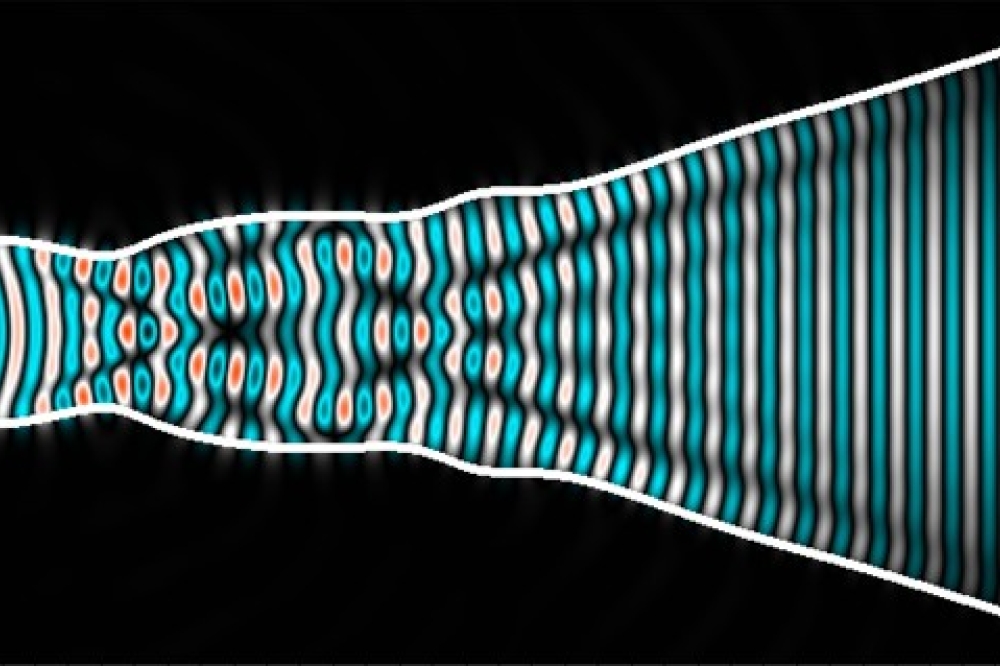
At the core of the device is an integrated blue gallium-nitride laser operating near 445 nm. Light from this laser is routed through precisely engineered AlN waveguides, where it undergoes second harmonic generation (SHG). This nonlinear optical process doubles the fundamental frequency of the input light, producing a narrow-linewidth output near 222 nm, squarely within the human-safe far-UVC band. Because frequency conversion occurs within a phase-matched waveguide, the emitted light is intrinsically narrowband, eliminating the need for external filtering, resonators or bulk nonlinear crystals. The result is efficient frequency doubling in a compact, solid-state far-UVC light engine that integrates into standard photonic packages without the bulk, high voltages, or fragile components associated with lamp-based sources.
Semiconductor manufacturing and materials platform enable scale
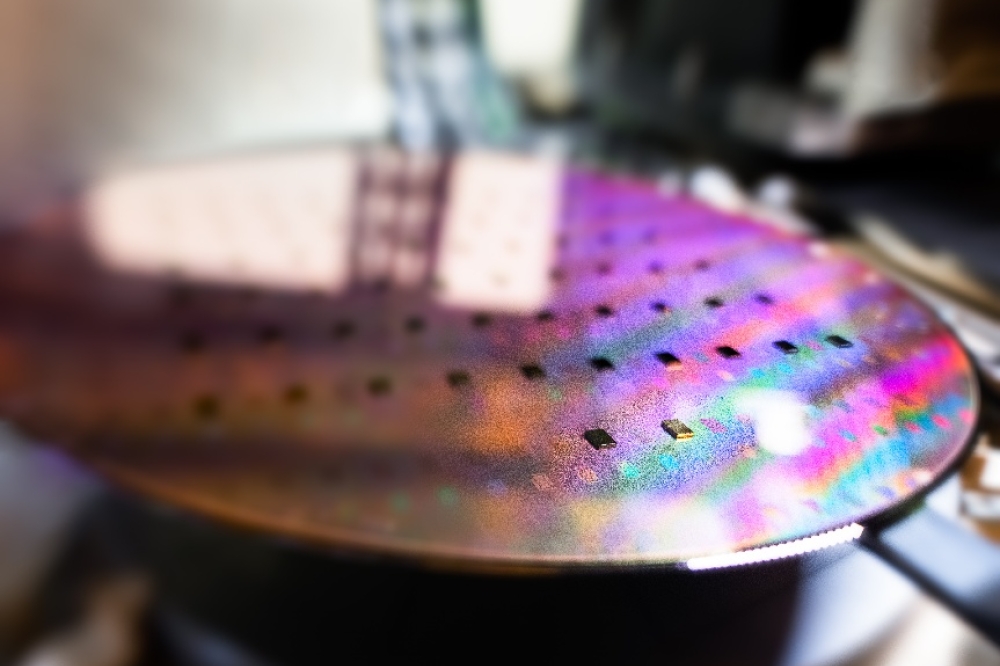
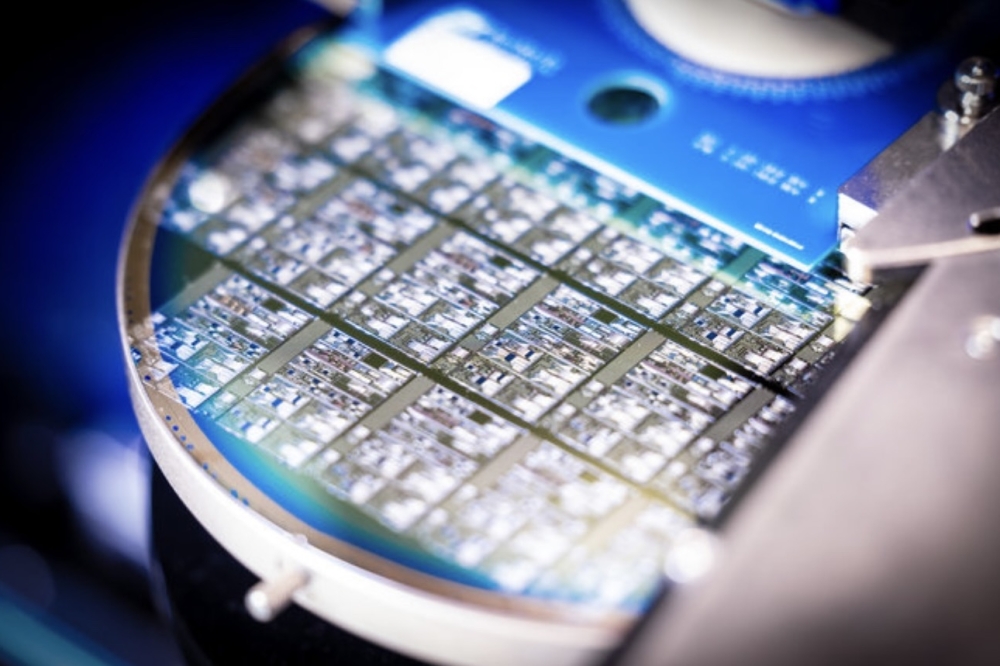
Uviquity’s AlN PIC platform is fabricated using wafer-scale semiconductor processes. Wafer-scale fabrication enables large numbers of identical devices to be produced using standard semiconductor processes, supporting improvements in uniformity, reproducibility, and manufacturing scalability. This wafer-scale approach contrasts sharply with lamp-based technologies, where each source is fabricated and assembled individually. Importantly, the company’s platform leverages the broader III-nitride semiconductor ecosystem that underpins today’s blue LED and laser industries. This provides access to mature supply chains, established fabrication infrastructure, and decades of manufacturing know-how. As a result, the technology will follow a cost and performance trajectory akin to that of LEDs, where dramatic reductions in cost and increases in efficiency were achieved through materials optimization and volume production.
Beyond cost, solid-state integration delivers additional benefits: longer operating lifetimes, lower maintenance requirements, improved reliability, and the ability to engineer and tightly control optical properties such as power, beam shape, and spectral width.
Applications enabled by chip-scale far-UVC
Because its optical characteristics can be engineered at the chip level, Uviquity’s PIC platform supports a wide range of applications.
Air disinfection and allergen control
In enclosed spaces, airborne pathogens are a primary driver of disease transmission. Far-UVC light can continuously inactivate viruses, bacteria, and spores as they circulate through a room, reducing transmission risk in real time. Studies have demonstrated rapid reductions in airborne pathogen concentrations, even under conditions where new pathogens are continuously introduced. Additionally, far-UVC light has been shown to rapidly reduce airborne allergens like dust mites, pet dander, mold and pollen. This combination of pathogen and allergen control highlights the potential for significant improvement in indoor air quality and comfort.
 Uviquity’s technology platform enables the heterogeneous integration of a blue laser with AlN waveguides on a single semiconductor chip to generate far-UVC light using second harmonic generation.
Unlike HVAC-based interventions, which require high airflow rates and significant energy consumption to achieve comparable air-change equivalents, far-UVC light sources operate locally within occupied spaces. Chip-scale emitters make it practical to integrate far-UVC sources into overhead lighting fixtures, transportation cabins, air purifiers, and other distributed systems, bringing disinfection and allergen inactivation directly to the point of highest risk rather than relying solely on centralised filtration.
Surface disinfection
High-touch surfaces play a critical role in pathogen spread, particularly in healthcare and food-handling environments. Far-UVC light disrupts both nucleic acids and protein structures, enabling rapid inactivation of a broad range of microorganisms, including drug-resistant bacteria.
Because far-UVC light can be used safely in occupied spaces, it enables frequent or continuous surface decontamination without interrupting normal operations. This opens new possibilities for reducing healthcare-associated infections, improving food safety, and extending shelf life across the food supply chain while reducing reliance on chemical disinfectants and addressing fungicide-resistant crops. Pathogens treated with far-UVC light are also less susceptible to photoreactivation than those dosed with 254 nm UVC, making it well-suited for use in crop protection during daylight hours and in the presence of people.
Water treatment
Far-UVC light is also effective in aqueous environments, where its higher photon energy can improve inactivation efficiency for certain pathogens compared to conventional 254 nm UVC. The shorter wavelength increases absorption in microorganisms and can reduce the required dose for specific targets, including viruses, bacteria, protozoa, and other waterborne microorganisms. Uviquity’s solid-state emitters provide a mercury-free alternative with dramatically smaller form factors, longer operating lifetimes, and reduced maintenance. These attributes enable compact point-of-use and point-of-entry systems, as well as modular integration into industrial and municipal water-treatment infrastructure.

Uviquity’s AlN photonic chip converts 445 nm blue laser light into 222 nm far-UVC light.
Optical sensing and analytical instrumentation
Beyond disinfection, far-UVC wavelengths are highly valuable for analytical instruments, including absorbance and fluorescence spectroscopy, and deep-UV Raman techniques. Uviquity’s PIC provides a narrow linewidth, collimated far-UVC light source with precise wavelength control to improve signal-to-noise ratios, while enabling more compact instrument designs.
 Uviquity’s far-UVC light emitter generates a narrow linewidth output with a peak wavelength at 222 nm.
These attributes are beneficial to existing analytical instruments and potentially disposable analytical instruments and sensors for environmental monitoring, life science, defense and semiconductor metrology applications.
Chemical destruction
High-energy far-UVC photons can drive direct photolytic chemical destruction by breaking strong molecular bonds that resist longer-wavelength UV light. Unlike advanced oxidation processes (AOPs), which depend on added reagents and radical chemistry, far-UVC photolysis enables direct bond cleavage under controlled conditions. This approach is well suited to treating persistent contaminants such as chloramines, selected pharmaceuticals, and certain per- and polyfluoroalkyl substances (PFAS) and related so-called “forever chemicals,” where direct photolytic bond cleavage is required. Uviquity’s chip-scale, spectrally pure emitters support precise process control and scalable deployment in advanced water-treatment applications.
Extending the platform: quantum photonics
Uviquity’s aluminum nitride PIC platform also supports emerging quantum photonic applications. AlN’s strong nonlinear optical properties enable low-noise frequency conversion across ultraviolet, visible, and telecom wavelengths on a single chip.
 Uviquity has developed a proprietary process to fabricate its far-UVC chips. Beginning with an MOCVD-grown AlN epitaxial wafer, high quality waveguides are fabricated with very smooth sidewalls subsequent to the cladding deposition.
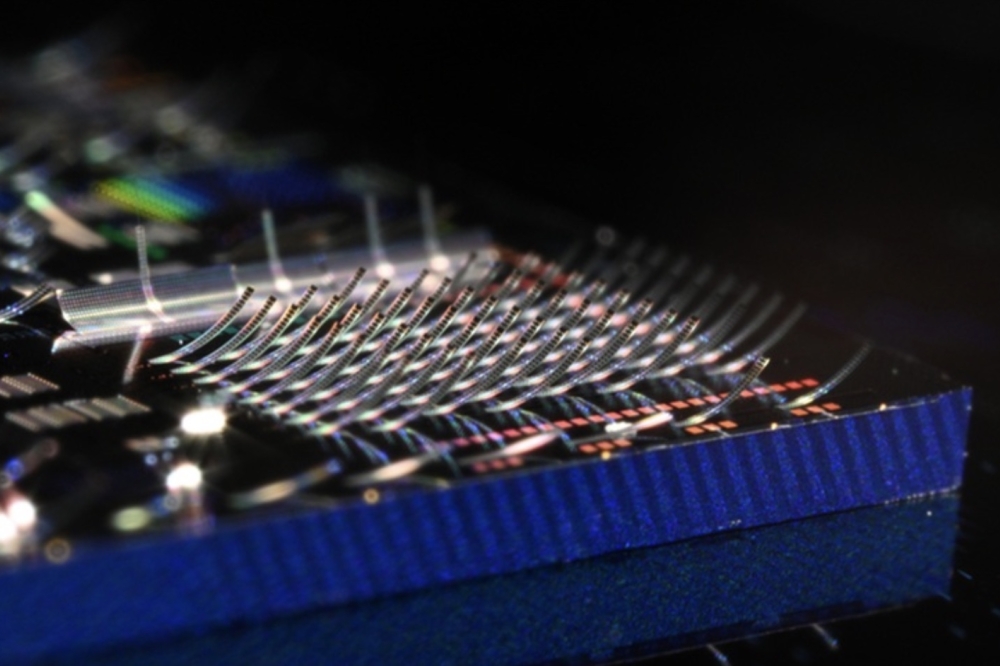
 (Center) Uviquity’s AIN R&D test chip after fabrication. The features on the chip are the waveguides through which light passes. (Left) Magnified area of the chip to show a single AlN waveguide. (Right) Cross section of the chip identifying the AlN waveguide between a bottom sapphire substrate and a top oxide cladding. Waveguides color-enhanced for emphasis.
This capability allows quantum information carried by photons to be translated between otherwise incompatible systems, such as atomic, ionic, solid-state, and fibre-based platforms, using wafer-scale semiconductor manufacturing.
By supporting both up- and down- conversion with high fidelity, the platform has the potential to serve as a foundational optical interconnect layer as quantum systems scale and become increasingly networked.
Advancing toward commercial deployment
With far-UVC light generation demonstrated using an integrated AIN photonic platform, Uviquity is now focused on commercialization.
Near-term efforts center on completing the company’s first product designs and engaging partners for characterization and application testing. Uviquity is working with partners across multiple industries to bring this technology into real-world systems.
At the same time, the technology’s roadmap targets continued improvements in nonlinear conversion efficiency, output power, and packaging flexibility advances that will further expand the range of applications.
A solid-state foundation for ubiquitous far-UVC light
By shrinking far-UVC light generation into a solid-state PIC platform, Uviquity enables a new class of disinfection, optical sensing, and photonic systems. The combination of human safety, germicidal efficacy, spectral purity, precision beam control, compactness, and semiconductor scalability positions the company’s chip-scale far-UVC light emitters as a powerful tool for improving global health, food security, and environmental sustainability.
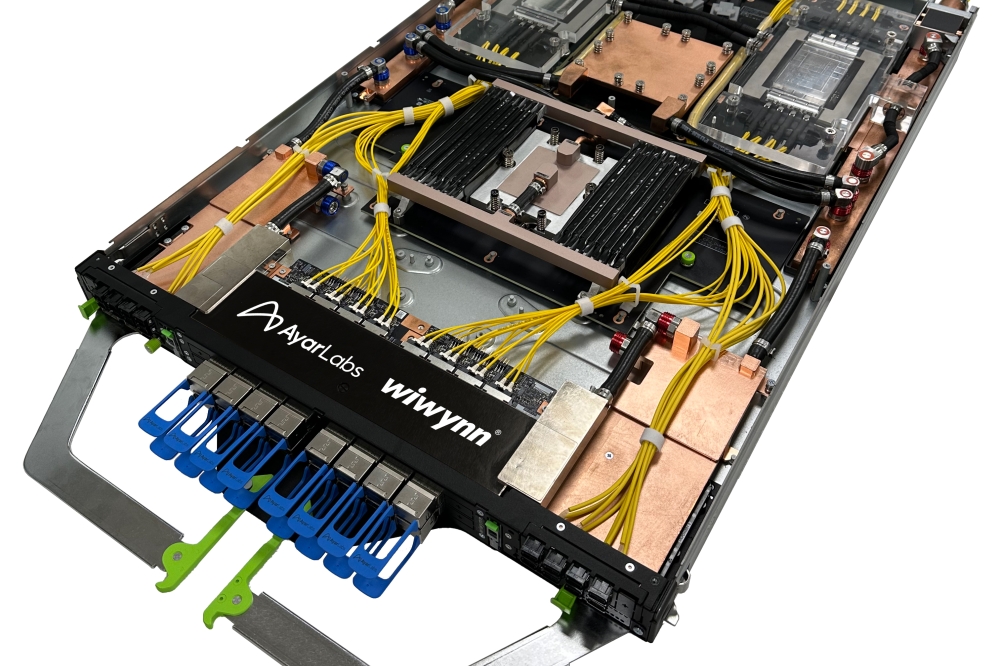
 Uviquity’s PIC technology enables compact far-UVC light engines that integrate seamlessly into standard photonic packages.