Entropy Computing: A photonics-enabled quantum computing solution for optimization
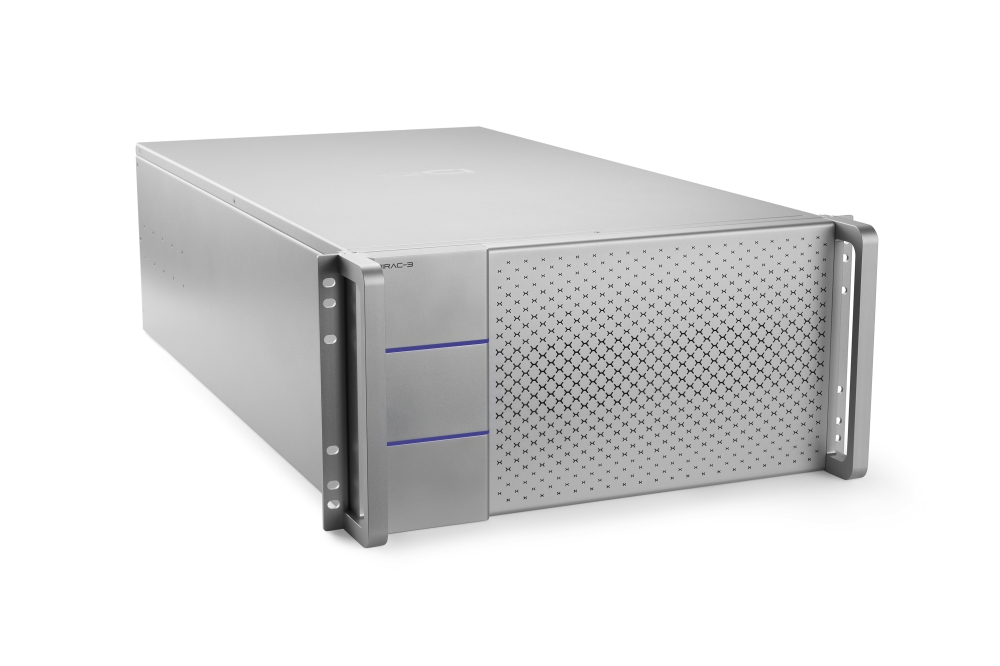
QCi’s Dirac-3 hybrid photonic system uses entropy computing to tackle complex NP-hard optimization problems, demonstrating rapid convergence, global minimum detection, and scalable performance beyond conventional classical approaches
BY JENN ROBINSON, LAC NGUYEN, POUYA DIANAT, AND YONG MENG SUA, QCi
ADVANCED computational problems underlie some of the most seemingly- mundane problems in our lives. The quintessential logistics problem – the traveling salesman problem, which aims at finding the best route for a traveling salesman to take for his sales – is also a classic example of an NP-hard problem.
While mathematically interesting, it is more important that these problems also represent critical issues in everyday life. Optimization problems inform everyday processes like GPS routing, shipping logistics, and process development in manufacturing, and making the solution of these problems more efficient could have profound effects on everyday applications.
Quantum and quantum-inspired computation is one way in which advanced tech can make these problems more easily solved in the real world. While large-scale, fault-tolerant entangled-gate quantum computers are still years away, intermediate machines based on advanced photonics, such as the Dirac-3 system from Quantum Computing Inc. (QCi), can be designed to enhance the efficiency of solving NP-hard optimization problems.
In their recent paper, QCi describes using their hybrid photonic-electronic computer in a paradigm called entropy computing to solve a sample non-convex optimization problem, which can also demonstrate how the calculations will scale as problems become more complex.
Dirac-3 and entropy quantum computing
The Dirac-3 is a hybrid photonic-electronic computing system that leverages an entropy quantum computing paradigm to solve large-scale optimization problems. The system uses time-correlated single photon counting and electro-optic feedback. A future version could also operate in an all-optical configuration.

The schematic for the entropy computing system using time-energy modes and a measurement-feedback system. The system is a hybrid electro-optic system that encodes the Hamiltonian into an optical signal.
The Hamiltonian is encoded into the amplitude of an electrical signal, which is then used to modulate an electro-optic modulator (EOM). A continuous-wave laser that has been passed through a variable optical attenuator to produce a weak coherent state is then passed through the EOM that is modulated by the Hamiltonian-encoded signal. This light is combined with unmodulated light and fed into a periodically-poled lithium niobate (PPLN) nonlinear crystal, which combines the two light beams using sum-frequency conversion, where the resulting light’s frequency is the sum of the two combined beams.
The output of this process is collected using time-correlated single photon counting and processed using a field- programmable gate array. This is then fed back to the EOM. After several feedback iterations, the time-binned accumulated photons represent the internal state vector of the Hamiltonian.
Unlike quantum annealers, the Dirac-3 system does not just approximate Boltzmann sampling, but directly minimizes the encoded Hamiltonian. A key feature of the system is the ability to handle a large dynamic range without losing fidelity and compromising solution quality.
A simple two-variable non-convex quadratic optimization problem can be used to demonstrate how this system can solve an optimization problem. The sample function is a quadratic function with three local minima and a global minimum. Not only does Dirac-3 converge rapidly to a solution within a few iterations, but it also shows the ability to avoid the local minima and converge on the global minimum, even in cases where the starting point for the problem was near a local minimum. Beyond this simple implementation, the system has been benchmarked using a 50-variable non-convex quadratic problem that is hard enough that a conventional gradient descent program often becomes stuck in a local minimum point.
Dirac-3 not only is able to converge to a solution nearly 80% of the time, it also shows the same avoidance of non-optimal minima that was seen in the smaller problem.
This successful benchmarking led QCi researchers to then implement a true NP-hard problem on Dirac-3. The maximum cut, or max-cut, problem, describes the partitioning of the vertices of a graph such that the number of edges is maximized. A 30-node unweighted graph was considered, which was then cut into a varying number of subsets. Dirac-3 was able to outperform Semi-Definite Programming (SDP), a standard current way of solving the problem, for two, three, and four cuts.The Dirac-3 has been successfully demonstrated in non-convex and combinatorial optimization programs, with a particular advantage in problems that demonstrate the same sum constraint present in the current version of Dirac. Similar problems have applications to portfolio optimization and resource allocation problems as well as problems involving elections and voting systems, among others.
 The results for solving max-cut problems on Dirac-3. These are the results of optimizing the problem for a max-2-cut, a max-3-cut, and a max-4-cut for a generalized 30-node graph, which is generated randomly with a 0.5 probability of connectivity between each two nodes.
Dirac-3 also simplifies the implementation of higher-order interactions in many problems by directly mapping high-order optimization problems. This provides an increase in solution quality and precision while requiring fewer resources to run. This successful benchmarking of Dirac-3 for solving optimization problems shows that further studies are necessary to explore its full capabilities.
Photonics enabled quantum progress
The Dirac-3 is a system that is fundamentally enabled by advanced photonics. While the current incarnation is a hybrid photonic-electronic system, an all-optical implementation of the system is possible.
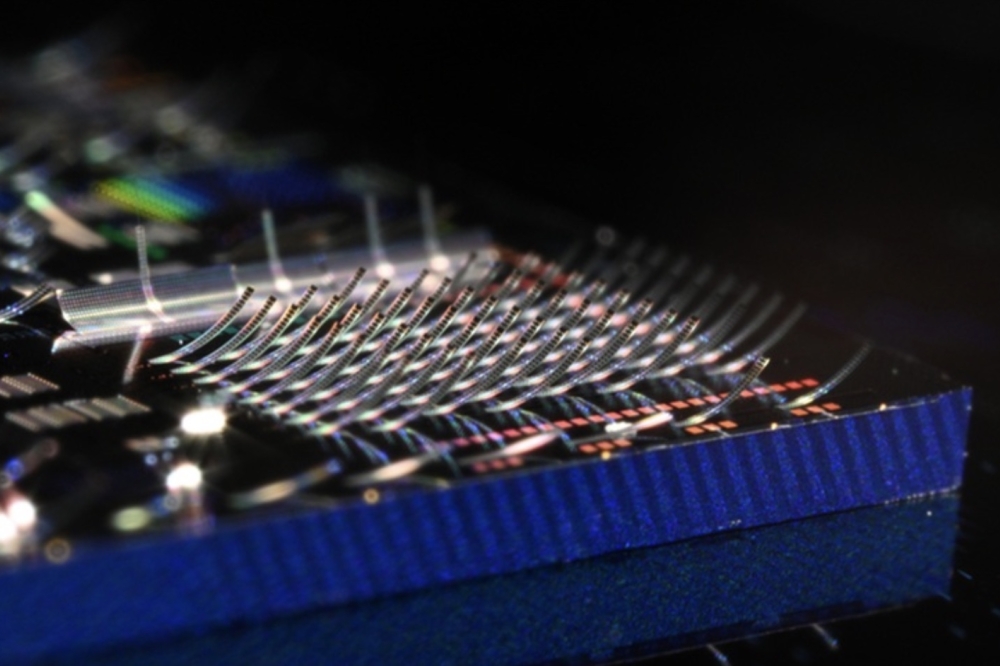
Currently, Dirac-3 relies on the speed of high-performance single photon detectors for accurate operation, and couples them with PPLN waveguides to ensure a compact and stable system by maintaining high efficiency and low dark counts. The integration of lithium niobate elements into the system also opens up the possibility of integrating Dirac-3’s operation protocol onto a nonlinear photonic integrated circuit (PIC).
The ultimate goal of an all-optical entropy quantum computing system would be a system that can be integrated on a photonic chip. Such a system would be compact and efficient, and, coupled with the room-temperature operation of a photonic open quantum system, would represent an accessible form factor for quantum-enhanced calculations. Systems using PICs would be scalable for production at a higher volume.
As the limitations of conventional classical computing systems become apparent for solving these NP-hard optimization problems, advances in photonics, particularly efficiency and speed of single photon detectors and the quality of optical modulators and mixers, will enable the new generation of quantum-enhanced calculations.
The benchmarking of the Dirac-3 not only shows how incorporating photonic elements into a hybrid computing system can provide near-term benefit in computing, but also hints at how next-generation photonic quantum entropy computing could represent a further advance in solving optimization problems.
QCi foundry and the quantum supply chain of the future
QCi aims to position itself not just as a vendor of high-performance quantum-enabled solutions to the technological problems of today’s world, but also as a key element in the future quantum industrial ecosystem. The lack of a robust supply chain for critical high-performance components for quantum technology remains a key stumbling block in scaling the manufacture of quantum tech.
The QCi Foundry is QCi’s answer to the problems of smaller companies that cannot develop in-house manufacturing but have outgrown university fabs and whose devices are more advanced than is produced in traditional semiconductor facilities.
The QCi Foundry focuses on thin-film lithium niobate, which combines manufacturing convenience with high performance as a nonlinear optical medium to be an ideal candidate for next-generation high-performance integrated photonics.
The Dirac-3 is QCi’s flagship advanced computing system and represents the advantage that photonics-enabled machines will have in tackling the optimization problems of the future. By continuing to explore improvements to this technology and by building up their own in-house photonics capabilities, QCi is bringing the quantum future into the present by putting photons to work.