What it would take: The rise of barium titanate

As a photonic material, lithium niobate is “old reliable.” But as the photonics landscape evolves, can barium titanate become a challenger? What would it take for this newcomer to equal, or even surpass, lithium niobate?
BY ALEX DEMKOV, LA LUCE CRISTALLINA
Challenges of integrated silicon photonics
IN THE last forty years [1], integrated Si photonics (SiPh) has reached the level of “very large scale of integration” with approximately ten thousand elements per photonic integrated circuit (PIC) [2]. SiPh’s rise was fueled by explosive speed and bandwidth demands in optical communication networks across short (datacom) and long (telecom) distances. The adoption of 400G and 800G transceivers is common across data centers, telecommunication and enterprise networks. More recently, photonic AI poses unprecedented data rate and optical network density requirements [3].
These developments spur an urgent need for a compact, fast and energy-efficient coherent transceiver. Integrated SiPh can no longer rely on Si alone. Other materials must be considered to satisfy the insatiable market appetite for bandwidth and speed while significantly reducing power consumption. Another aspect, particularly for AI applications, is the co-packaging of optical and electronic devices on the same die. This has implications for optimal wafer size choice and the requirement that all materials are compatible with stringent Si fabrication facility protocols. There are three groups of materials that can realistically challenge silicon dominance over the active integrated photonic devices: III-V semiconductors, electro-optic polymers and ferroelectrics. Before discussing these, let’s explore what makes a coherent transceiver special and the optical modulation schemes needed for very high data rates.
Data modulation
Non-coherent transceivers typically use intensity-modulated direct detection (IM-DD) technology; they are simple and work well with single-mode fiber. They were perfect for applications when transmission distance wasn’t too long, and the data rate wasn’t too high.
However, when the distance measures hundreds or even thousands of kilometers (long fiber links) or the data rate becomes very high (high-speed networks and AI), a more sophisticated modulation format (typically a combination of phase shift keying (PSK) and amplitude modulation (AM)) is needed. This scheme usually requires a reference signal and, therefore, a coherent transceiver and phase modulation.
In optical systems, techniques like quadrature amplitude modulation (QAM) and QPSK enhance data transmission rates and spectral efficiency. These methods enable the encoding of data into the phase of the optical signal, facilitating high-speed and high-capacity communication systems.
Hardware and processing needs
To make use of electro-optic (EO) modulation, we need an EO material, like a material exhibiting a linear electro-optic effect (Pockels effect) to change refractive index with an electric field. We can use materials such as EO polymers, Lithium Niobate (LiNbO₃), or Barium Titanate (BaTiO₃).
We also need integrated optical waveguides to guide light, and metal electrodes patterned around them to apply voltage. These can be fabricated in the EO material itself (monolithic approach) or in an adjacent Si or SiN layer (hybrid approach). This requires fabrication facilities and processes that can handle all the materials involved.
Finally, we need a phase shifter or an IQ Modulator. A Mach-Zehnder Interferometer (MZI) that can control phase and amplitude independently for in-phase (I) and quadrature (Q) is an option.
Operational MZI requirements are as follows: to reduce power consumption, low drive voltage is required. To support multi-gigabit data rates (e.g., 320+ Gbps), we need high bandwidth. For signal integrity and low distortion, low optical loss and chirp are a must. For integration and manufacturing scalability, a compact footprint is desirable.
From the system point-of-view, we need a high-speed Driver to amplify electrical signals to drive the electrodes. For modulation (QPSK, QAM) and error correction, a digital signal processing unit (DSP) is needed. Ideally, control electronics should be included In the package calling for co-packaged optics or CPO, which will require advanced in-line processes like lithography and etching. Because the lithium oxide component of lithium niobate is relatively volatile, and lithium is a contaminant in Si fabrication, it is not practical to use lithium niobate in applications requiring CPO. There is, hence, a bifurcation from the integration and fabrication point-of-view, resulting in a binary platform choice for on-chip integration between either SiPh or Thin-Film Lithium Niobate (TFLN). Fortunately, it doesn’t have to be.
Why BaTiO₃?
Over the past decade, Si-integrated single crystal thin film BaTiO₃ (BTO) has emerged as a promising material platform for a new generation of electro-optic devices in SiPh. The key attributes of BTO technology are a very low Vπ·L, high bandwidth and linear frequency response, low insertion loss, low power operation and high-speed data transfer. These, combined with novel integration concepts, open exciting applications in high-speed communication, optical computing (quantum and neuromorphic) and sensing/ranging [4].
BTO is a ferroelectric with similarities to LiNbO ₃ (LN). Modulation is achieved using the Pockels effect, and a typical device is based on a wave guide phase shifter. However, unlike LN, BTO is a soft ferroelectric with a relatively low Curie temperature, high dielectric constant and giant Pockels effect; the r42 component of the Pockels tensor is 1,300 pm/V and is one of the largest known. It’s a dielectric material from the near ultraviolet to the mid-infrared part of the spectrum with low optical losses and relatively high refractive index (no=2.304; ne=2.267 at 1550 nm). These properties enable fabrication of extremely small (~100 μm), low loss (0.14 dB/cm), fast (~ps) and broadband (>70 GHz) modulators and high Q (1.4x10 6) resonators. The material also maintains strong electro-optic response to cryogenic temperatures, which is important for quantum computing applications.
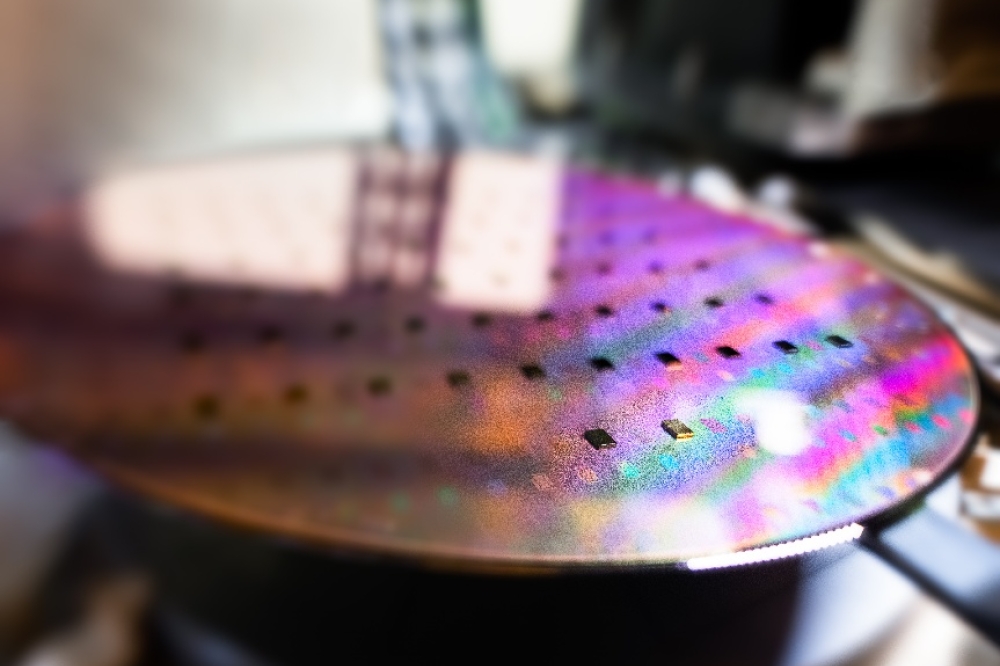
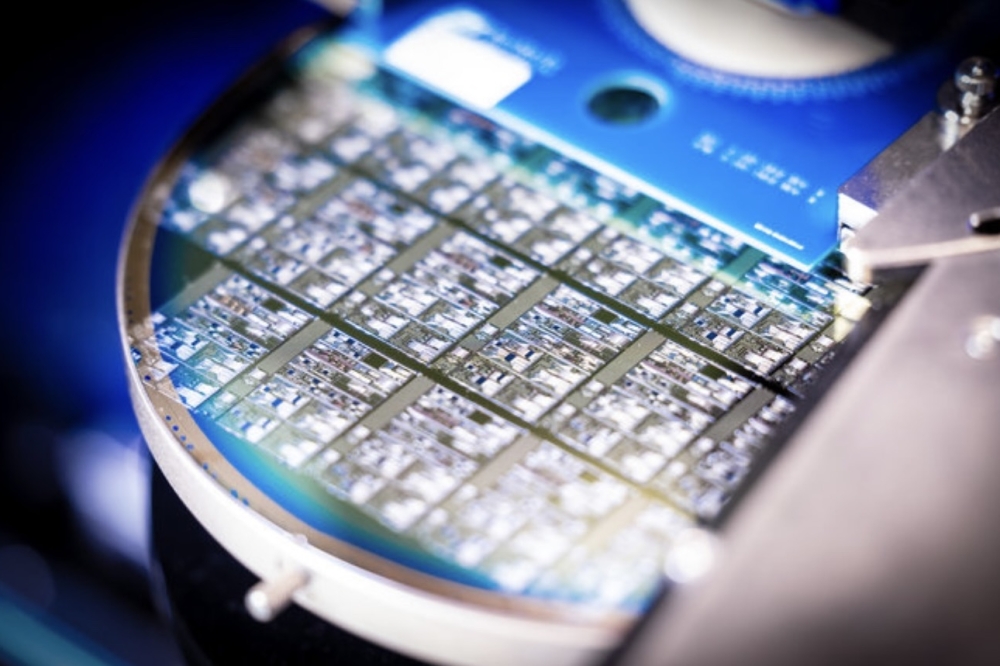
BTO is also compatible with CMOS manufacturing. BTO can be grown on Si wafers up to 300 mm in diameter [5] and can serve as a standalone photonic platform or be used with existing silicon or SiN platforms via direct wafer to-wafer or die-to-wafer bonding. A qualitative diagram comparing key metrics of EO ferroelectric materials is shown in Fig. 1.

Fig 1. Ferroelectric electrooptic materials performance and benchmark comparison.
State-of-the-art and current research efforts
BTO boasts one of the largest known Pockels coefficients. The Pockels coefficient relates the change in the index of refraction (ratio of the speed of light in vacuum to that inside the material) to an applied electric field as n(E)=n0-1/2 rn0 3 E, where n0 is the index of refraction under zero field. Refractive index is known from the Snell’s law (see Fig. 2 for a simple description of refraction and how it changes with the EO effect). It is worth noting that the integrated SiPh is only possible due to the total internal reflection in a waveguide, a condition when the refracted beam can’t leave the higher refractive index medium (water in the case of the water/air interface or Si for an Si/SiO 2 waveguide).

Fig 2. Refraction is a familiar phenomenon caused by the change of the speed of light when crossing from one medium into another. The fish appears at a shallower location than it actually is as the beam of light bends crossing from water into air. Waveguiding is based on the total internal reflection inside the waveguide. If water were an EO material, one could have manipulated the perceived position by applying an electric field across the water tank.
In a ferroelectric crystal, a modulating electric field can couple directly to the electrons, to the lattice vibrations (optical phonons) or can cause a strain modulation via the converse piezoelectric effect (all ferroelectrics are also piezoelectrics). We illustrate the contributions to the EO or Pockels coefficient r (describing the change of the refractive index in response to an external field) in Fig. 3 following Ref. [6].

Fig 3. In a ferroelectric, there are three contributions to the effect. The first term describes the direct effect of the applied field on the polarizability (non linear optical susceptibility), and only electrons can respond at optical probing frequencies; this is second harmonic generation (x(2)). The second term is the so-called ionic or optical phonon contribution related to the Raman effect, surviving up to THz. The last term is the converse piezoelectric effect. The strain is caused by the applied field. This contribution is present only at low modulating frequencies (<1 GHz); it can be neglected at high modulating frequencies, but it dominates at low temperatures.
In BTO, the electronic (χ(2) ) contribution to the r42 tensor component (the largest component) is insignificant, while the Raman and converse piezo effect contribute to approximately equal measure on the order of 650 pm/V each. This implies that, though the EO response will diminish at very high frequencies (above the acoustic resonances), it should still outperform LN. It also suggests that if the tetragonal phase is stabilized by suppressing the phase transition e.g., by epitaxial strain, the material should maintain a sizable EO response at low temperature when the optical phonons are “frozen out” [7].
The second term is the so-called ionic or optical phonon contribution related to the Raman effect, surviving up to THz. The last term is the converse piezoelectric effect. The strain is caused by the applied field. This contribution is present only at low modulating frequencies (<1 GHz); it can be neglected at high modulating frequencies, but it dominates at low temperatures.
Manufacturing infrastructure
By using an epitaxial buffer of SrTiO₃, single-crystal BTO thin films can be easily integrated on Si by direct deposition, unlike LN where crystal slicing and wafer bonding processes are necessary. A variety of deposition techniques such as chemical vapor deposition, molecular beam epitaxy (MBE), sputtering or pulsed laser deposition can support this purpose. Integration of BTO into existing Si-photonics (SiPh) foundry infrastructure requires access to large production-scale wafers. Among the deposition techniques, off-axis RF magnetron sputtering (with its stoichiometric transfer of source composition to the substrate) may be most suitable for volume production. Pulsed laser deposition tends to scale poorly for larger areas, while chemical vapor deposition relies heavily on hydrogen-containing precursors that create absorption centers for light at telecom wavelengths. MBE is generally too slow but could be ramped up if stoichiometry can be automatically controlled.
Although BTO on 300-mm wafers have already been demonstrated with 3σ thickness uniformity of <3% and a Pockels coefficient of >1000 pm/V [8], there are few commercial suppliers. Among them, start-ups such as Lumiphase in Europe (200- and 300-mm wafers) [9] and La Luce Cristallina in the US (200-mm wafers) [10] have established the infrastructure for medium-scale volume production of BTO wafers for photonic devices.
PsiQuantum also produces BTO photonic components in a 300-mm wafer scale, facilitating the construction of their photonic quantum computer [5].
Performance of state-of-the-art building blocks
BTO-based passive and active electro-optic photonic devices have demonstrated remarkable performance in terms of propagation loss and low-power operation. Micro-racetrack-resonators fabricated with monolithic BTO-on-insulator have demonstrated high intrinsic quality factors of 5×10⁵ with a record-low straight (bent) waveguide loss of 0.15 dB/cm (1.5 dB/ cm) [12]. Continuous improvements in high-quality material growth, patterning and etching techniques have significantly improved the performance of BTO-based modulators and waveguides.
As a result, an improved quality factor exceeding 1×10 6 with straight (bent) waveguide loss of 0.32 dB/cm (0.48 dB/cm) has been achieved [13]. Mach-Zehnder modulators (MZM), with arm length of 3.75 mm fabricated with the same material, have demonstrated V π·L of 0.54 V·cm. Recent IBM studies report propagation loss of 0.11 dB/cm and large Kerr non-linear refractive index of 1.8×10⁻¹⁸ m2/W in BTO ridge resonators, indicating that the PICs based on BTO may achieve state-of-the-art efficiency beyond what has been demonstrated today [14]. Ultra-fast switching networks, one of the key components required for photonic quantum computers, is achieved by incorporating low-loss BTO phase shifters into the 300-mm photonic stack developed by PsiQuantum. Fabricated devices include a 2-mm phase shift length with propagation loss of 0.55 dB/cm and FOM Vπ·L of 0.62 V·cm in a 2mm×2mm footprint enabling large high-speed switching networks [5].
Current wafer-level integration
Until recently, most work on BTO-based modulators focused on hybrid technology where the waveguide was fabricated in Si or SiN deposited on, or bonded to, BTO [15]. Ultra-low power refractive index tuning with a power consumption of 106 nW/FSR (free spectral range) has been achieved in a hybrid BTO-SiN platform integrated on Si. Hybrid integration of BTO on SOI waveguides using a special layer transfer technique exhibited high-performance EO modulation with Vπ·L of 1.67 V·cm, enhancing the EO properties of Si photonics [16]. The monolithic approach is gaining popularity, along with the introduction of commercial 200-mm and 300-mm BTO-on Si or SOI wafers allowing the fabrication of all PIC components on a single chip.
BTO films can be integrated on Si with both in-plane (a-oriented films) and out-of-plane (c-oriented films) ferroelectric polarization. The combination of these options creates a rich space for possible device architectures. In addition, plasmonic devices using Si-integrated BTO have also been explored. Overall, modulators look promising; the losses are moderate - on the order of 0.1 dB/cm; Vπ·L as low as 0.23 V·cm has been demonstrated (0.014 V·cm in plasmonic devices); the bandwidth is close to 100 GHz; and data rates above 250 Gb/s have been achieved. In addition, Si-integrated BTO-based devices have shown robust cryogenic performance. Importantly, BTO is fully compatible with CMOS manufacturing with large area wafers, making it suitable for low-cost, large-volume manufacturing.
Future performance evolution and industrialization outlook
As Si-integrated BTO quality rapidly improves and processing capabilities are established at Si photonic foundries, we expect the unique properties of this material to be gradually embraced by more of the integrated silicon photonics community.
The Pockels effect allows for a pure phase modulation mechanism with low power, fast response, low insertion loss and minimal crosstalk. BTO photonic devices have already demonstrated the ability to operate at low voltage and low power consumption. Its main strength, though, is beyond stand-alone high-speed modulators.
Co-packaged optics (CPO) is an area where compatibility with CMOS processing is essential. As AI processing demands increase, CPO will be necessary to address this bandwidth, latency and power requirement. Switching from pure silicon to a material that can be made into compact modulators with high modulation efficiency at very high switching speed and low power will become necessary.
Simultaneously, material compatibility with CMOS foundries is essential. For CPO, InP-based materials, and BTO are the only practical solutions for modulators.
So, as AI spurs optical engine demand, wider industrial acceptance of BTO may follow. It is expected that silicon photonics foundries will begin developing processes for BTO on Si in the next 1-2 years and offer PDKs involving BTO soon after. It will initially be die-to-wafer bonding on existing Si or SiN architecture but will eventually add monolithic BTO processing.
The ability to make Mach-Zehnder modulators ten times shorter in BTO than those based on LN, while operating at the same voltage, makes BTO a natural platform for building general purpose photonic processors (GPPPs). GPPPs consist of a mesh of waveguides, couplers and Mach-Zehnder interferometers. Similarly, BTO has a strong potential for use as reconfigurable weight elements in photonic neural networks, as demonstrated by a recent publication by Ligentec and Lumiphase using a BTO-SiN hybrid platform [16].
BTO on SiN is also the materials platform of choice implemented by PsiQuantum for their photonic quantum computing system. This demonstration shows that BTO can be made very low loss and can modulate well even at cryogenic temperatures (0.33 dB-V for VπLα) [5]. This proves that BTO retains its strong Pockels response at low temperature [20] due to the strong contribution of the piezoelectric effect on the electro-optic response [7].
While BTO is not yet well-known in nonlinear optics, the physics of BTO is essentially the same as LN, and it is expected that this will change with BTO wafers availability. In fact, the Kerr nonlinearity of BTO is about ten times larger than LN [14]. Thus, BTO will be the material of choice for monolithically integrated devices requiring both a large Pockels effect and a large Kerr nonlinearity.
Such devices could be used for high-precision optical clocks, parallelized coherent data communication using solitons or high-resolution dual-comb spectroscopy. BTO-based integrated electro-optic modulators have seen great advances in technological readiness in the last decade, demonstrating that they can overcome the bandwidth limitations and power consumption issues of SiPh plasma-dispersion and thermo-optic modulators.
These advances strongly position BTO SiPh technology to be the next generation of electro-optic modulators for data center and optical interconnect applications, including co-packaged optics, non-volatile optical memory, on-chip photon sources and optical-RF converters, as well as for future optical quantum and neuromorphic computing platforms.