Kopin unveils micro-LED optical interconnect

Kopin Corporation and Fabric.AI are developing a micro-LED optical interconnect to replace copper links in AI systems, targeting higher-bandwidth, lower-power data centre connectivity.
Kopin Corporation has announced a strategic collaboration with Fabric.AI to develop a micro-LED-based optical interconnect technology aimed at replacing copper links in high-performance computing and AI data centres.
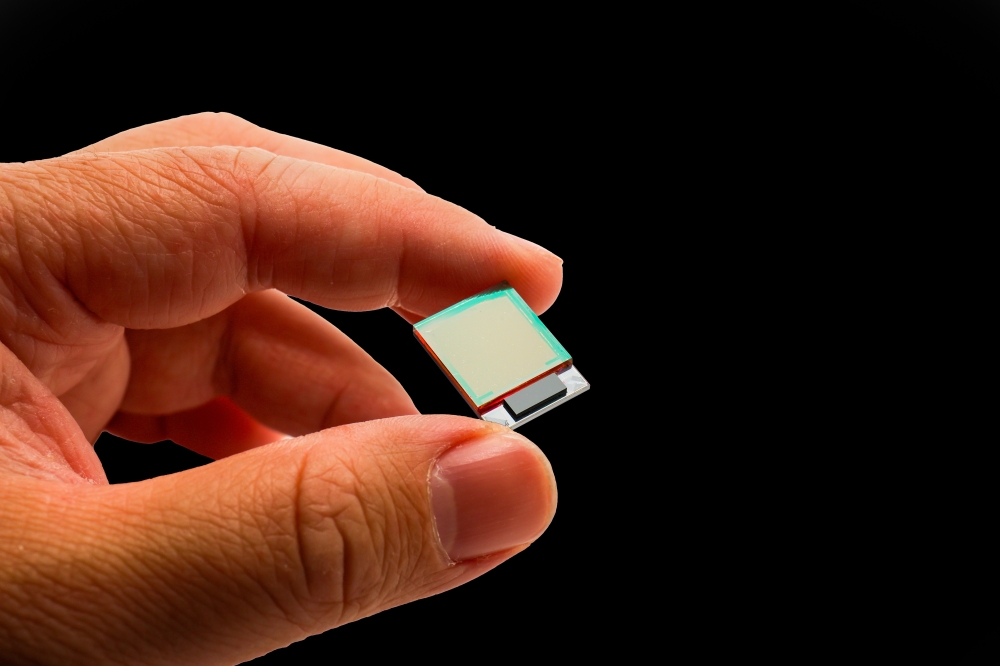
The companies are jointly developing what they call a Neural I/O optical interconnect, which leverages Kopin’s proprietary micro-LED technology and bi-directional NeuralDisplay architecture.
The approach repurposes programmable micro-LED pixels as high-speed optical transceivers, enabling data transfer between GPUs and processors at significantly higher bandwidth and lower energy per bit compared with traditional electrical interconnects.
The effort targets one of the key bottlenecks in scaling AI infrastructure: the limitations of copper-based interconnects in bandwidth density and power efficiency.
By shifting to optical I/O, the companies aim to address growing data movement demands in large-scale AI systems.
Fabric.AI has placed a $15 million purchase order with Kopin to fund development of a demonstration chipset.
Under the agreement, Kopin will act as the exclusive manufacturing partner for the Neural I/O devices and holds a 19.9% ownership stake in Fabric.AI.
The collaboration combines Kopin’s expertise in micro-LED materials, process development, and manufacturing with Fabric.AI’s system-level design capabilities for AI infrastructure.
The resulting technology is positioned as an alternative approach to conventional silicon photonics-based interconnects, using micro-LED arrays as integrated optical transmitters for short-reach, high-speed links.
The companies are targeting deployment in next-generation “AI factory” data centre architectures, where optical interconnects are increasingly seen as critical to overcoming power and performance constraints in scaling compute clusters.