Monash develops room-temperature valleytronic chip

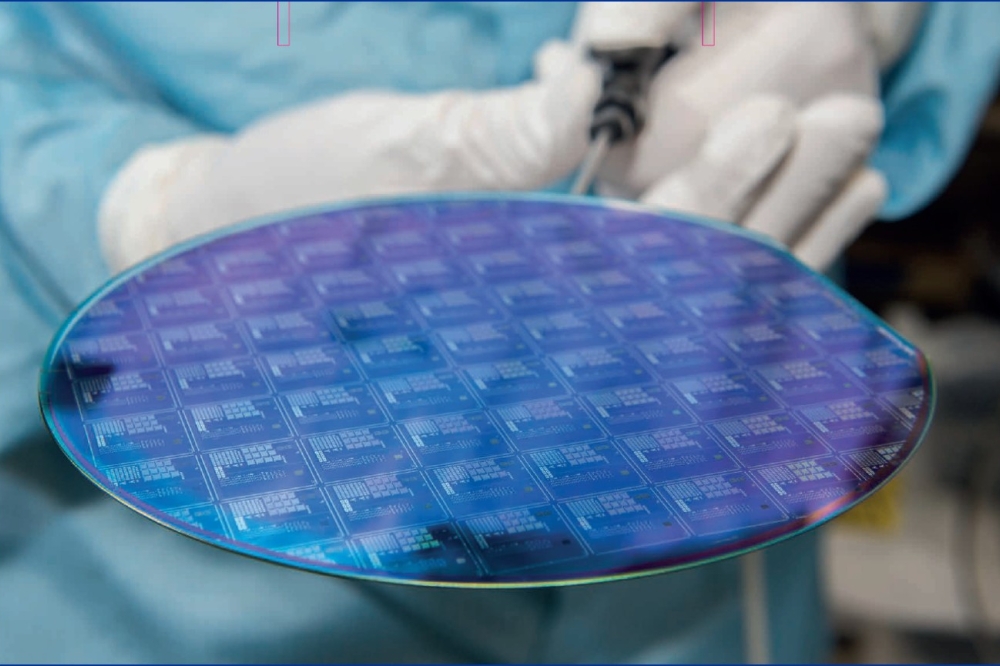
Researchers have demonstrated a room-temperature valleytronic nanocircuit capable of generating, routing and reading optical information on a single chip, opening new pathways for photonic and quantum computing.
Researchers at Monash University have developed a nanoscale valleytronic circuit that can generate, direct and detect light-based information on a single integrated chip, marking a step forward for photonic data processing technologies.
The device combines ultrathin two-dimensional materials with engineered metasurfaces to control light at the nanoscale, enabling information encoding through the “valley” degree of freedom, a quantum property that can be used to carry and process data.
For the first time, the team demonstrated a fully integrated system capable of creating optical signals, routing them through nanostructures and converting them into electrical outputs within a compact chip-based platform.
Importantly, the system operates at room temperature, addressing a key limitation in many quantum and photonic technologies that typically require cryogenic conditions.
In a demonstration, the researchers successfully encoded and processed two separate images simultaneously, highlighting the device’s ability to handle parallel streams of optical information.
The team said the approach could enable new classes of compact, energy-efficient computing systems, with potential applications in quantum technologies, secure communications and AI-driven optical processing.