UCLA advances terahertz PICs

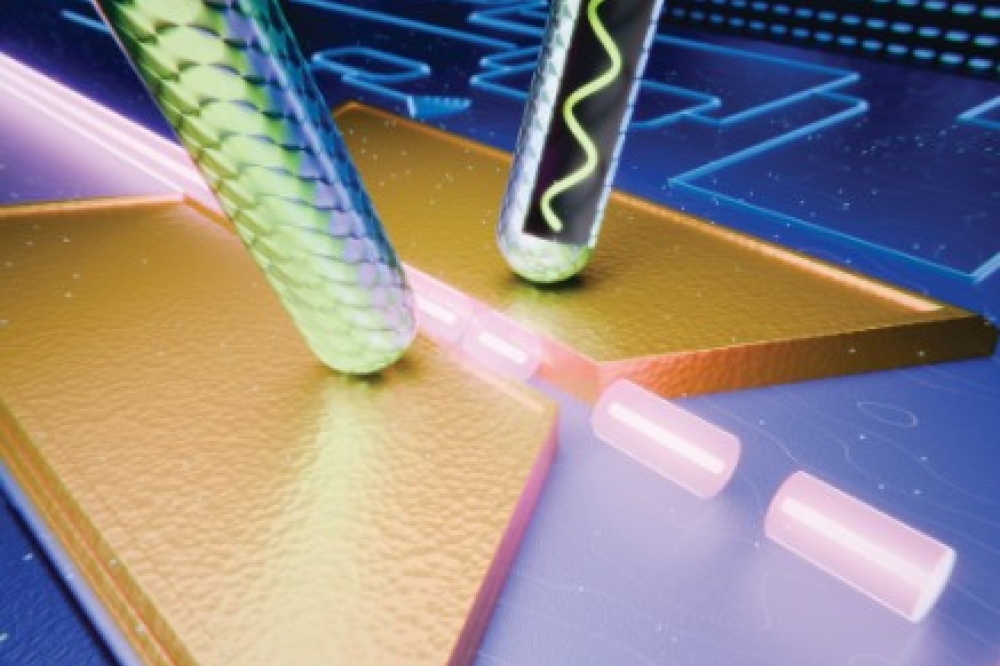
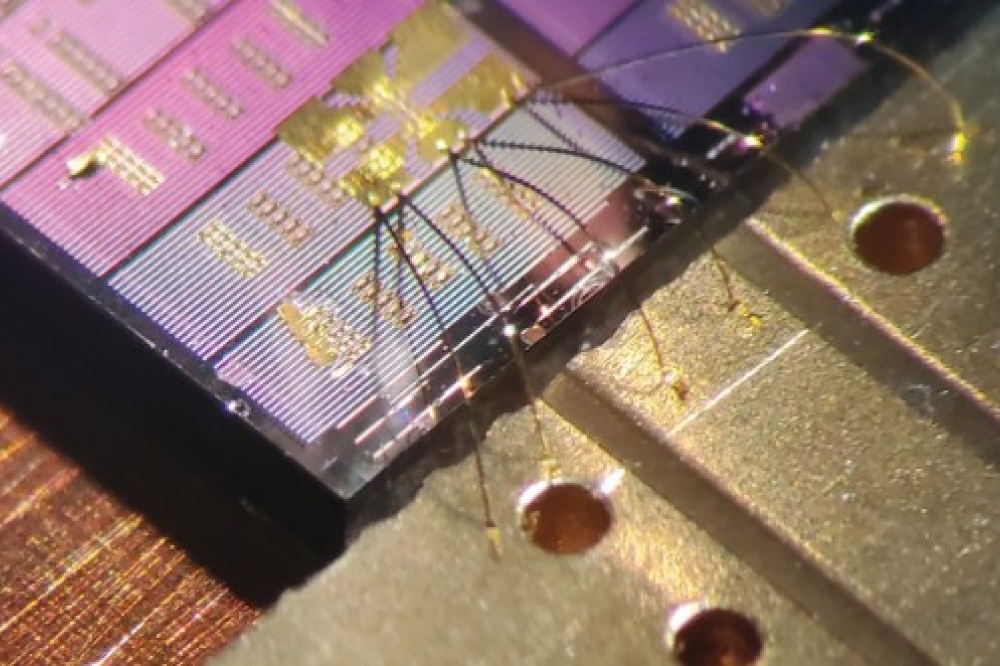
Researchers at the University of California, Los Angeles (UCLA) have demonstrated a monolithically integrated photonic platform that can generate and detect terahertz signals on a single semiconductor chip, offering a potential path toward compact systems for communications, sensing and imaging.
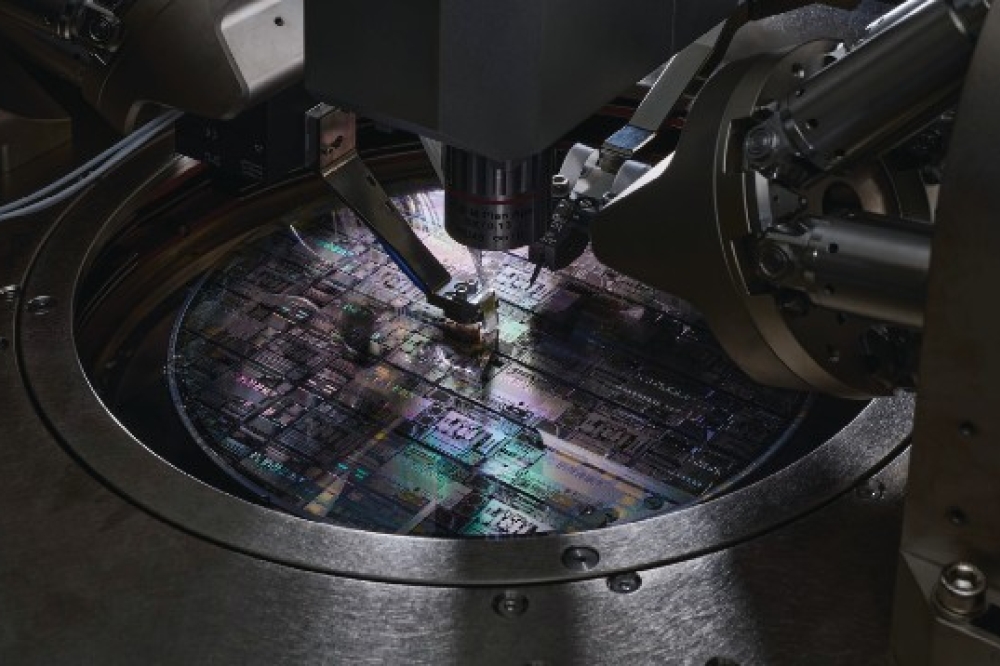
The work introduces the Monolithically Integrated Terahertz Optoelectronics, or MITO, platform, which uses quantum-well devices fabricated on a gallium arsenide/aluminum gallium arsenide (GaAs/AlGaAs) photonic integrated circuit platform and is designed to work with fabrication methods already used in the photonics industry.
“By demonstrating that many of these functions can be integrated onto a single chip using proven industry-standard fabrication platforms, our study opens the door to practical, scalable terahertz technologies for real-world applications,” said Mona Jarrahi, professor of engineering at UCLA and a co-author of the study.
Terahertz technology has long been seen as a promising route to ultra-fast wireless links, high-resolution imaging and advanced spectroscopy, but practical systems have remained difficult to build because they typically rely on bulky and expensive laboratory equipment.
Instead of using specialized materials, the UCLA team focused on quantum wells, ultra-thin semiconductor layers already common in photonic integrated circuits, and found that electrons escape these structures in less than a trillionth of a second, fast enough to support terahertz operation.
The researchers fabricated quantum-well PIN photodiodes on a GaAs/AlGaAs substrate and showed both terahertz generation and detection through gain-enhanced interband photomixing across the 100–500 GHz range.
By integrating a semiconductor optical amplifier on the same chip, they boosted terahertz generation efficiency by roughly an order of magnitude while reducing the optical power needed for operation.
Although the prototype still depends on external lasers, the MITO platform is intended to support sources, detectors, modulators, amplifiers and eventually tunable lasers on a shared semiconductor substrate, pointing to a future in which scalable terahertz photonic integrated circuits could be manufactured using established GaAs/AlGaAs processes rather than custom fabrication techniques.