Chip-scale magnetometer promises low-power, high-precision magnetic sensing

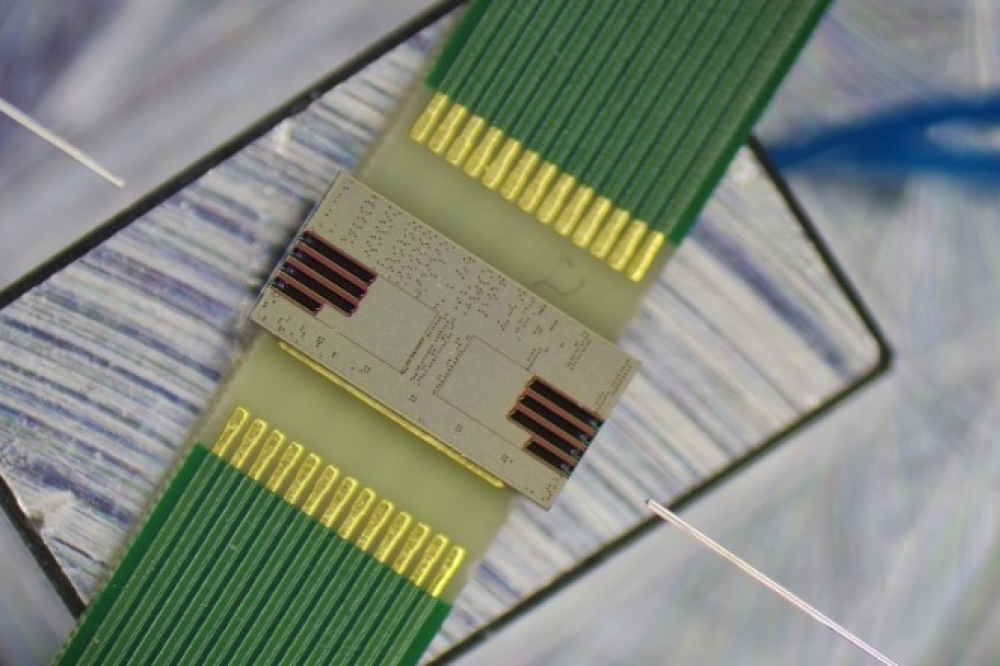
Researchers at the University of California, Santa Barbara, and the University of Cagliari, Italy, have developed a precision magnetometer fully integrated onto a chip, offering high sensitivity while operating at room temperature with minimal power consumption. The device, led by Galan Moody of UCSB and co-investigator Caroline A. Ross of MIT, uses a cerium-doped yttrium iron garnet (Ce:YIG) material that changes its optical properties in response to magnetic fields.
Built on silicon photonics, the magnetometer detects magnetic fields by measuring phase shifts in light passing through the Ce:YIG using an optical interferometer. The device achieves sensitivity comparable to cryogenic magnetometers, detecting fields from a few tens of picotesla to 4 millitesla, but without requiring bulky or low-temperature setups.
This chip-scale design offers advantages for space missions, navigation in GPS-denied environments, and medical imaging, such as magnetocardiography and magnetoencephalography. Researchers are also exploring the use of quantum light to further reduce noise and enhance sensitivity, similar to techniques used in gravitational wave detectors.
By integrating magneto-optic functionality directly onto a photonic chip, the development represents a significant step forward for photonic integrated circuits, combining classical and quantum approaches to create compact, low-power, high-performance sensing devices.