QCi takes quantum photonics live at CES 2026 with real-world PIC demonstrations

Quantum Computing Inc. (QCi) will make its CES debut in January 2026 with live demonstrations that place photonic integrated circuits at the centre of practical quantum computing, signalling a shift from laboratory research to deployable systems.
The Nasdaq-listed company will showcase its technology at CES Foundry in Las Vegas from 7–8 January 2026, a new CES platform designed to highlight the convergence of AI and quantum technologies. QCi will present hands-on demonstrations illustrating how quantum photonics can deliver faster, more efficient decision-making without requiring specialist quantum expertise.
Unlike many quantum computing approaches that remain experimental, QCi is positioning integrated quantum photonics as a near-term infrastructure technology. Its live demonstrations will focus on use cases familiar to industry audiences, including financial modelling, AI training acceleration, and drone route optimisation, each designed to show how light-based quantum systems can handle complex optimisation problems more efficiently than conventional approaches.
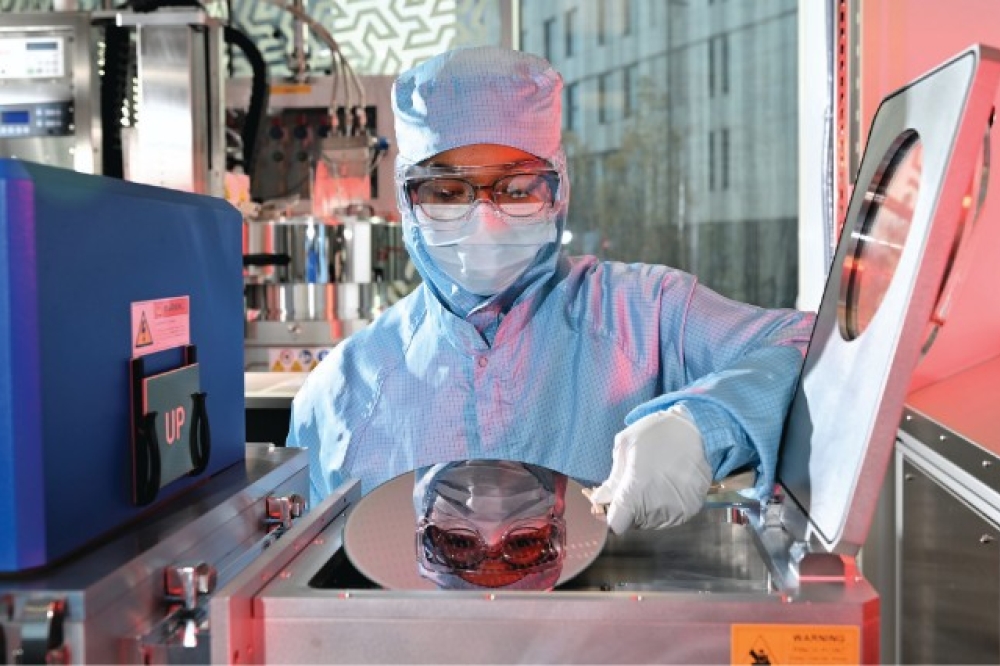
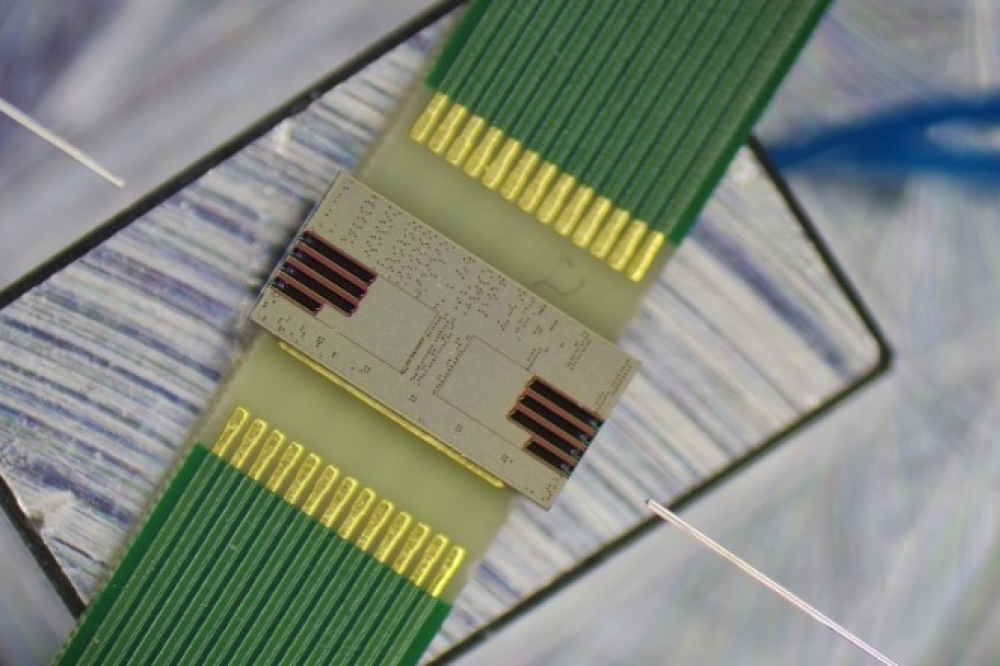
A key differentiator for PIC audiences is QCi’s emphasis on manufacturability and scale. The company operates a thin-film lithium niobate (TFLN) photonic foundry in Tempe, Arizona, supporting 150 mm wafer production. This positions QCi within the growing ecosystem seeking to translate advanced photonic devices into foundry-compatible, scalable platforms suitable for commercial deployment.
As AI systems become more data-rich, QCi argues that the bottleneck is increasingly decision quality, speed, and energy efficiency rather than compute alone. The company is making the case that quantum photonic integrated circuits can complement classical AI hardware by improving optimisation and learning efficiency while maintaining practical power and cost profiles.
By bringing live, working quantum photonics demonstrations to CES, QCi aims to show that PIC-enabled quantum systems are moving beyond proof-of-concept and into real-world applications, marking a notable moment for the convergence of quantum technologies, integrated photonics, and AI infrastructure.