China launches photonic AI lab

A new research centre at Shanghai Jiao Tong University will focus on photonic computing and integrated photonic chips for next-generation AI systems.
Shanghai Jiao Tong University has launched the Shanghai Key Laboratory of Integrated Photonic Computing Chips and Systems, a new research facility dedicated to advancing photonic computing technologies for artificial intelligence applications.
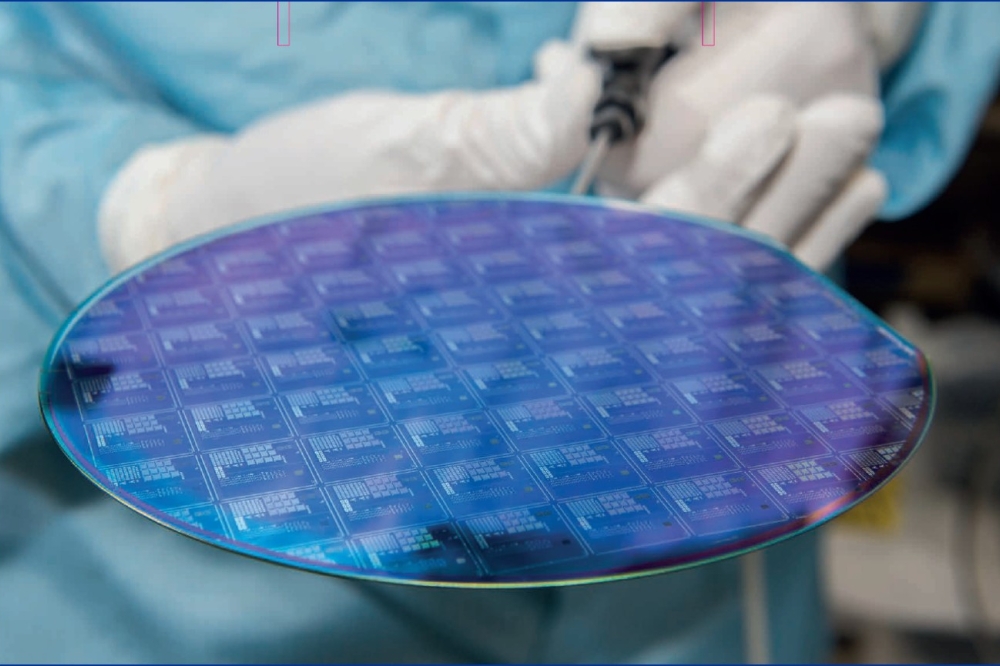
The laboratory, described as China’s first industry-academia platform focused on integrated photonic computing, will conduct research spanning photonic chip architectures, silicon photonics integration, optical components, algorithms, and commercial applications.
As AI models continue to increase in size and complexity, conventional electronic processors face growing challenges related to power consumption and performance scaling.
Photonic computing, which uses light rather than electrons to transmit and process information, is attracting increasing attention as a potential route to higher bandwidth, lower latency, and improved energy efficiency.
According to Zou Weiwen, director of the laboratory and professor at Shanghai Jiao Tong University, photonic computing offers significant advantages in computing power, energy efficiency, and data transmission performance, making it a promising technology for future AI systems.
The launch reflects growing global investment in integrated photonics and optical computing as researchers seek alternatives to traditional semiconductor scaling.
By bringing together expertise from academia and industry, the new laboratory aims to accelerate the development of photonic integrated circuits and systems capable of supporting next-generation AI workloads.
The initiative underscores the expanding role of PIC technologies beyond communications and networking, positioning photonic computing as a key area of future innovation for the semiconductor and AI industries.