Caltech achieves ultralow loss photonic chips

Caltech demonstrates ultralow-loss photonic chips with near-fibre performance and record visible-wavelength results.
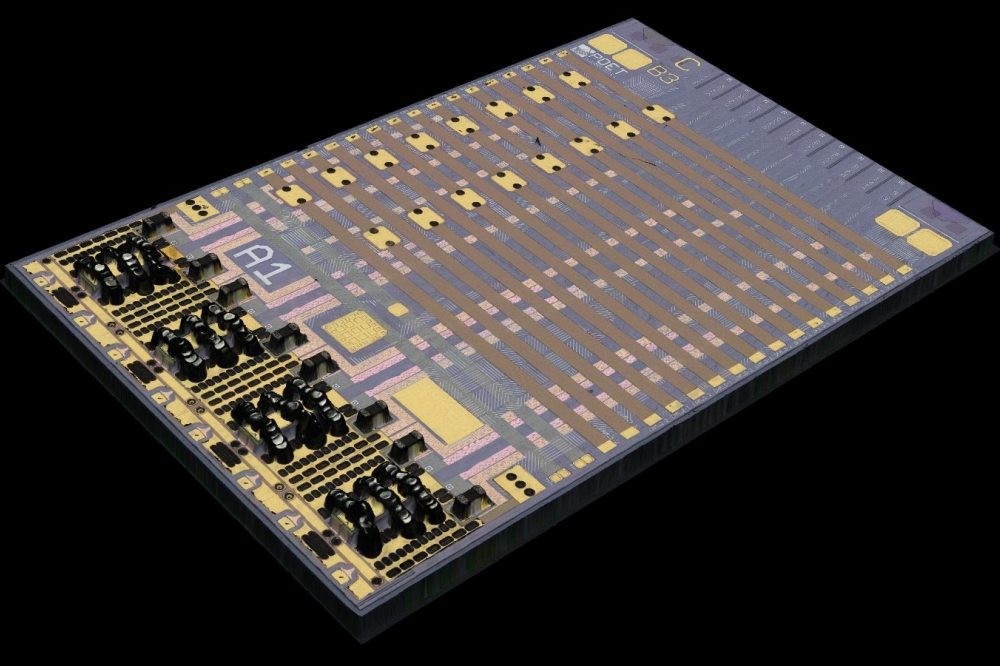
Researchers at Caltech, led by Kerry Vahala, Ted and Ginger Jenkins Professor of Information Science and Technology and Applied Physics, have demonstrated a photonic chip platform with ultralow optical loss approaching that of optical fibre, including at visible wavelengths.
The results, published in Nature, address a major limitation in photonic integrated circuits (PICs).
The work, led by postdoctoral scholar Hao-Jing Chen and graduate student Kellan Colburn, uses lithographically fabricated germano-silicate waveguides, the same glass material used in optical fibre, on standard silicon wafers.
A thermal reflow process smooths the waveguides to near-atomic roughness, significantly reducing scattering loss.
Devices fabricated on the platform match state-of-the-art silicon nitride PICs at near-infrared wavelengths and exceed previous visible-wavelength loss records by up to 20×.
Lasers demonstrated more than a 100-fold improvement in optical coherence.
The advance could enable ultra-coherent PICs for optical clocks, atomic sensors, quantum systems, and energy-efficient AI data-centre communications.