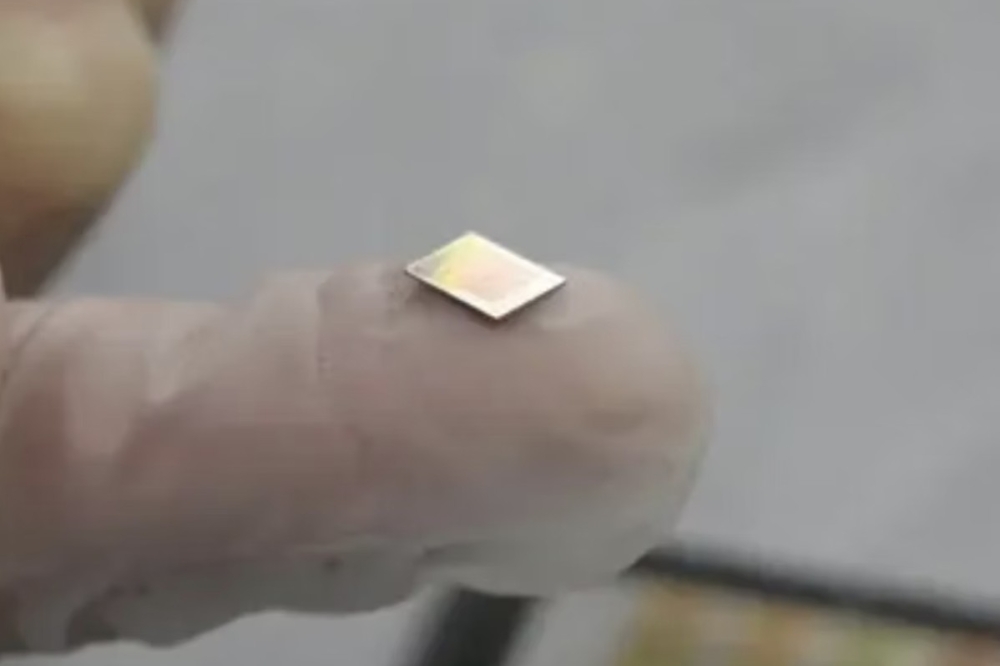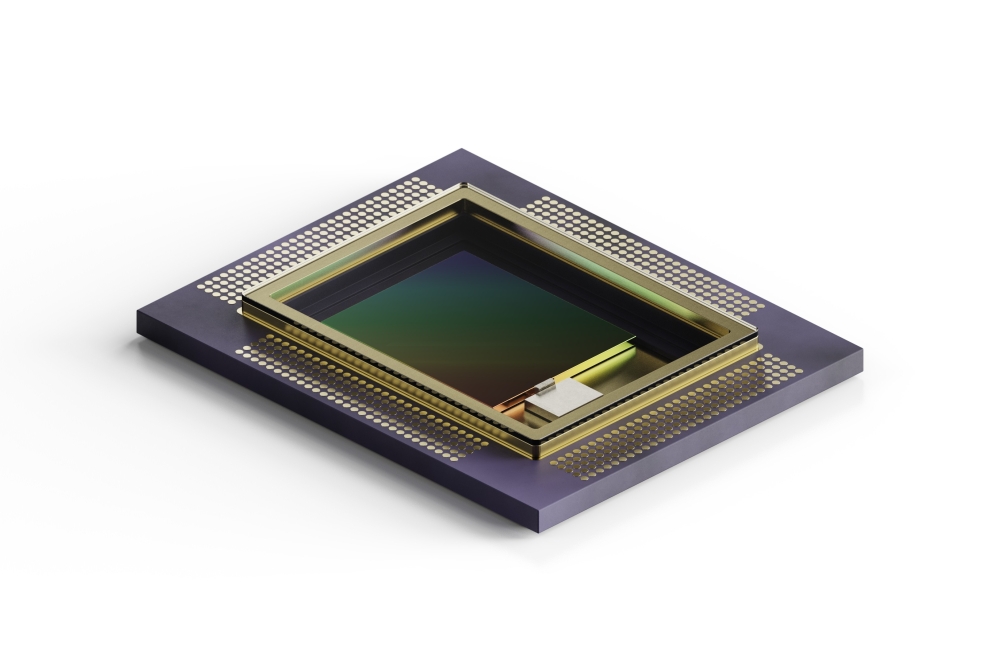
POET Technologies on its new 1.6T hybrid transmitter PIC
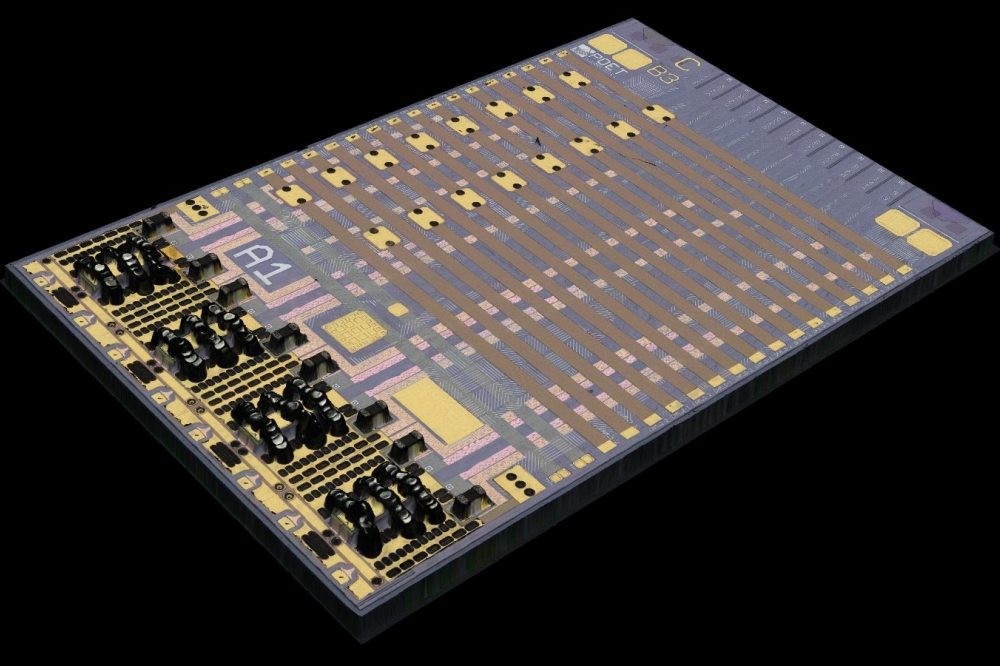
Raju Kankipati, Chief Revenue Officer at POET Technologies, talks to Sarab Chopra, Editor at PIC Magazine, about the company’s new 1.6T Hybrid Transmitter Photonic Integrated Circuit (PIC) and its significance for next-generation optical interconnects. He explains how POET’s hybrid integration platform enables high-performance, scalable, and manufacturable transmitter solutions to meet the rising bandwidth demands of AI and data-centre networks, and what this development signals for the future of high-speed, energy-efficient optical communications.
SC: Can you give us an overview of the new 1.6T Hybrid Transmitter PIC that POET has announced?
RK: Absolutely. The 1.6T Hybrid Transmitter Photonic Integrated Circuit is designed to deliver high-speed optical interconnects that meet the rapidly growing demands of AI and hyperscale data centre networks. It integrates eight high-speed PAM4 lanes to achieve a total bandwidth of 1.6 terabits per second. This means it can handle enormous amounts of data over single-mode fibre up to 2 kilometres, which is critical for next-generation AI workloads and cloud infrastructure. What makes this significant is that it is not just a lab demonstration but a scalable, manufacturable solution built on POET’s hybrid integration platform, which allows us to combine photonics and electronics efficiently on a single interposer.
SC: What makes this hybrid integration approach different from traditional methods of building optical transmitters?
RK: Traditional approaches often rely on discrete components that are manually aligned and assembled, which introduces signal losses and limits scalability. Our Optical Interposer platform allows us to integrate lasers, modulators, drivers, and monitoring photodiodes on a single wafer-scale platform. This eliminates the need for complex manual assembly and provides better electrical and optical performance. It also makes the manufacturing process more reliable and repeatable. Essentially, we can now produce high-performance optical engines at a scale suitable for commercial data centre deployment, which is a significant step forward in the photonics industry.
SC: How does this technology help data centres manage AI and other high-bandwidth workloads?
RK: AI workloads, especially in cloud computing and hyperscale environments, require massive amounts of data to move between servers and processing units quickly and efficiently. Our hybrid transmitter delivers high bandwidth with low latency and energy efficiency, which directly addresses these needs. By integrating photonics and electronics, we reduce power consumption and increase signal integrity, which allows data centres to scale performance without a proportional increase in energy usage. This is particularly important as AI models continue to grow and data throughput requirements increase exponentially.
SC: You mentioned that this is a hybrid system. Can you explain exactly what you mean by that?
RK: In this context, hybrid means that we are combining different types of components on a single platform. We integrate active components such as lasers and modulators alongside electronic drivers and monitoring elements onto a common interposer. This enables very tight integration at the wafer level and allows us to maintain high performance while avoiding the complexities of discrete assembly. The hybrid approach is what makes scaling to 1.6T feasible and sets the stage for even higher bandwidths in the future.
SC: How does this development position POET Technologies in the competitive optical engine market?
RK: It gives us a unique advantage because it addresses one of the main bottlenecks in the industry, which is manufacturability at scale. Many competitors can demonstrate high-speed optical links in the lab, but scaling those technologies for volume production is extremely challenging. With our hybrid integration approach, we can produce high-speed modules that are ready for deployment in real-world data centres. This positions POET not just as an innovator but as a practical supplier of next-generation optical interconnects.
SC: What are the next steps for this technology and its deployment in the market?
RK: Right now, the 1.6T Hybrid Transmitter PIC is the first commercially viable solution at this scale, but we are already working on the next generation, which will push beyond 3.2T. Our focus is on enabling the industry to meet growing AI and hyperscale demands while maintaining energy efficiency and manufacturability. We believe this technology will set the foundation for future optical networks that support extremely high-speed data transfer, low latency, and sustainable energy usage in large-scale computing environments.